https://finet52.com/exploring-the-diverse-and-rich-flavors-of-african-cuisine-a-pillar-page-guide/
Uganda, a region of East Africa known for its rich and unique culinary culture, is undoubtedly the most emblematic of national identity and culinary memories: luwombo. This dish is more than just a delicacy; it is a cultural symbol embodying ritual, identity, and interpersonal bonds. It’s often said, “A feast without luwombo isn’t a true celebration,” and this sentiment is embodied in nearly every Ugandan household and at every festival.
The origins of Luwombo: from royal palaces to ordinary people’s homes
The story of Luwombo begins at the court of Buganda. In the late 19th century, the chef of Kabaka Muwanga II, hoping to create a unique dish for the king, experimented with wrapping meat and vegetables in flexible banana leaves and steaming them over a fire. The leaves’ delicate, green aroma gradually permeated the ingredients, and the meat, simmered for a long time, became tender and tender, while the broth was so rich it could almost be eaten with rice. The king, upon tasting it, was deeply impressed, and Luwombo became a royal favorite. It then spread to the general public, becoming a symbol of nobility and a must-have for every feast.
Today, Ugandans still cook Luwombo on important occasions, and even though the process is complicated and time-consuming, they still regard it as a way to express respect and joy. It is both food and part of etiquette.
The Magic of Banana Leaves: A Natural Steamer and Seasoning
The role of banana leaf in Luwombo goes far beyond just packaging. It’s a natural cooking tool that’s both environmentally friendly and functional.
Heat preservation and sealing : Banana leaves are soft and tough. After being roasted or blanched in hot water, they are easier to fold and can lock the food inside tightly.
Flavor Penetration : During heating, the leaves release a light grassy aroma that blends with the spices and gravy to create a unique and refreshing flavor.
Cultural Symbolism : In the eyes of Ugandans, banana trees are a symbol of life and harvest. Wrapping food with their leaves is a ritualistic expression of bringing the gifts of nature directly to the table.
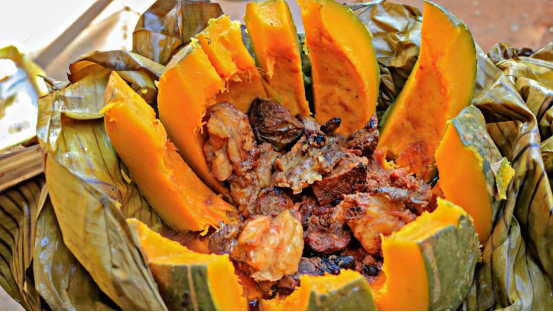
The diverse flavors of Luwombo
Luwombo takes on different forms depending on the main ingredient, and almost every Ugandan family has its own preferences and secret recipes.
Chicken Luwombo : The broth is clear and rich in spices, and it is the most common version served at weddings and festivals.
Luwombo, beef or goat meat : The meat is tender and tasty due to long-term steaming, bringing a deep meaty aroma, and is often regarded as a top-quality dish for entertaining guests.
Fish Luwombo : Fresh fish often taken from the Nile River, with a refreshing taste, especially suitable for hot climates.
Mushroom Luwombo : A vegetarian favorite. The mushrooms absorb the broth, creating a concentrated and delicious flavor.
Regardless of the version, the core flavor is always the combination of peanut butter, onions, tomatoes and local spices, and the unique fragrance brought by banana leaves makes it rich and memorable.
How to make an authentic Luwombo?
This is a skill that requires patience. It is not just cooking, but more like a ritual.
Prepare the ingredients : Cut the meat into pieces and marinate with onions, tomatoes, peanut butter and spices.
Prepare the banana leaves : Lightly toast the leaves over a fire or blanch them in hot water to soften them so they are easier to fold.
Wrapping technique : Place the marinated ingredients in the center of the leaves, fold and tie to prevent the juice from leaking out. This process often tests the chef’s patience and skills.
Slow-cooking : Place the wrapped Luwombo on the steaming rack inside the pot, add water to halfway up the pot, and steam over medium-low heat for 2-3 hours. This long wait is key to the fusion of flavors.
Some older Ugandans would say, “An impatient person can’t make good Luwombo.” This statement captures the true meaning of the dish – slowness and meticulousness are its soul.
The symbolic meaning of Luwombo in culture
Luwombo is more than just a dish, it is a cultural symbol.
Family and Festivals : Luwombo is an indispensable offering at weddings, Christmas, national holidays or funerals. It symbolizes unity and sharing, and heralds a bountiful harvest and joy.
Status and respect : In traditional concepts, only distinguished guests or important relatives and friends can be treated to an authentic Luwombo.
Inheritance and Identity : The younger generation continues the culture by learning how to make Luwombo, which is also part of family education.
For Ugandans, Luwombo is the intersection of food and culture. Its existence serves as a reminder that no matter how times change, there are always traditions worth preserving.

Frequently Asked Questions (FAQ)
What does Luwombo taste like?
It’s a complex, rich stew with a rich, nuanced flavor: the aroma of meat, the richness of peanut butter, the spiciness of spices, and the fresh, vegetal notes of banana leaves intertwine for a rich and complex experience.
Are banana leaves edible?
Not directly. They’re just a steamer and a seasoning. The real flavor is the meat and broth inside the leaves.
What if you can’t buy banana leaves?
You can use lotus leaves, parchment paper, or tin foil instead. While you won’t be able to fully replicate the original flavor, you can still retain the essence of wrapping and steaming.
What’s the hardest part of Luwombo?
It’s undoubtedly the wrapping technique. One loose fold can undo hours of hard work.
Conclusion: An experience that transcends taste and culture
Luwombo is a dish that truly embodies the saying “food is culture.” It speaks to Ugandan history and royal legends, while also reflecting the joy and reunions of countless families today.
As you pick up a steaming bowl of Luwombo and peel back the layers of banana leaves, the wafting aroma seems to transport you through time and space, into a distant African story. It reminds us that food is more than just a way to fill our stomachs; it is a profound connection between people and nature.
Next time you have a chance, try making Luwombo yourself, or savor it at a family gathering in Uganda. You’ll discover that this seemingly simple dish conveys something far more profound than just a delicious meal—it’s about patience, sharing, and the inheritance of cultural memory.
https://finet52.com/exploring-the-diverse-and-rich-flavors-of-african-cuisine-a-pillar-page-guide/
Related Posts
Site Migration Notice – African Culinary Heritage
Important Site Update The content of this site has been…

Jollof Rice: The Controversial King of Deliciousness
This article has been updated and moved. Click here to…

Zimbabwe’s Delicious Legend: Sadza and Its Stewed Meat Companion
This article has been updated and moved. Click here to…